Description
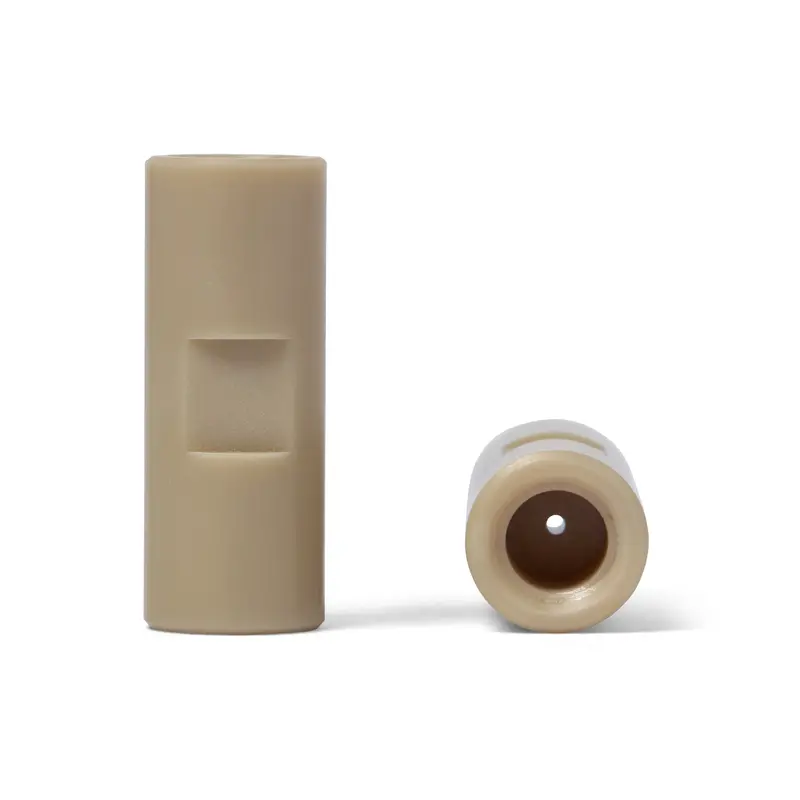
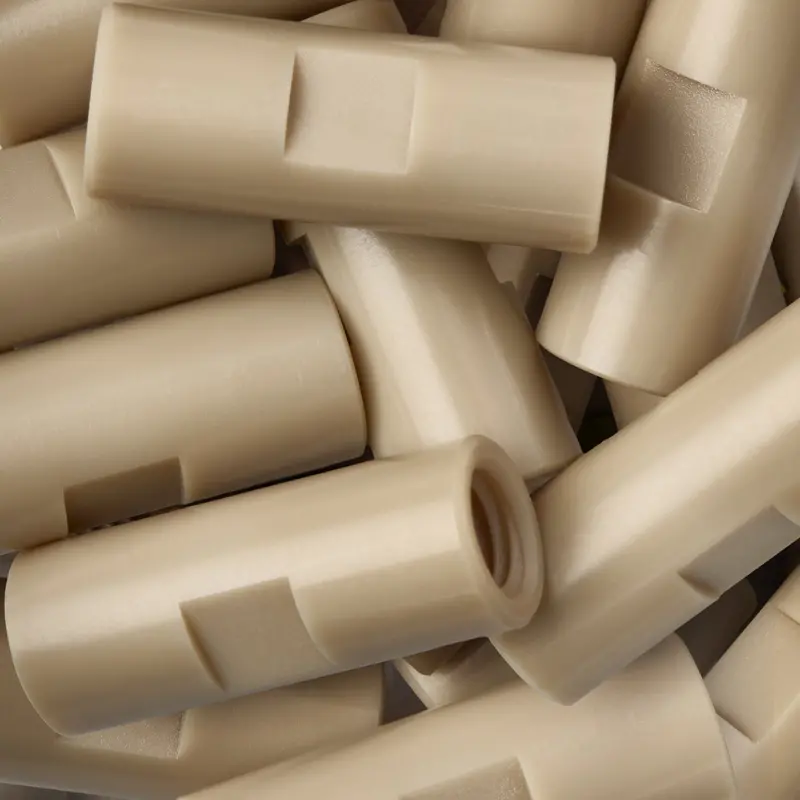
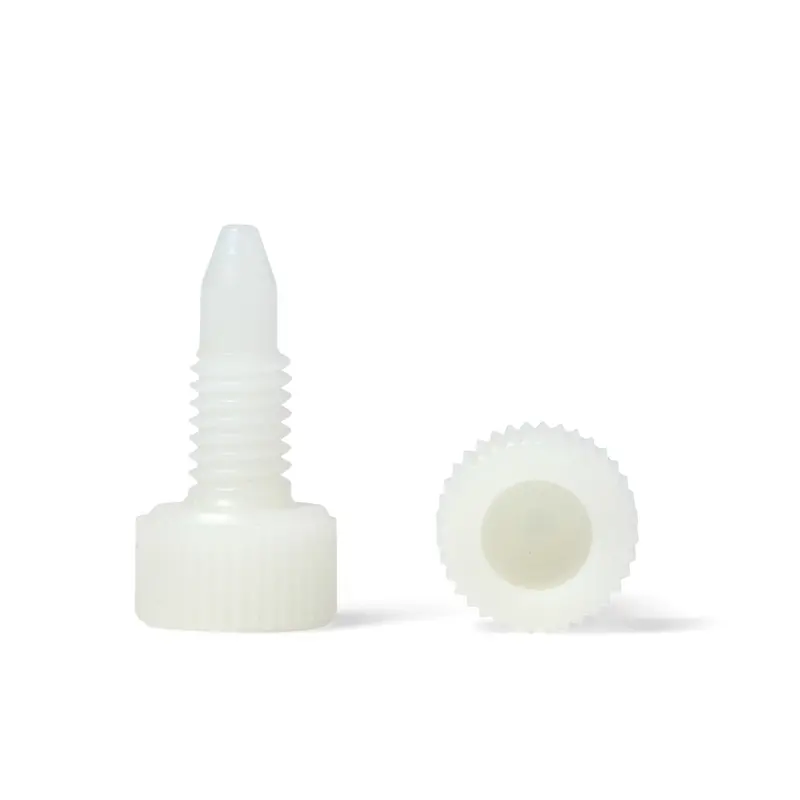
The HPLC Two Way Union made of PEEK (Polyetheretherketone) is a specialised component designed for a combination of 1/8″ and 1/16″ capillary tubes in High-Performance Liquid Chromatography (HPLC) systems. The 1/16″ variant has an inner thread size of #10-32 UNF, the 1/8″ variant features an inner thread size of #1/4-28″ UNF, while the 1/16″-1/8″ variant accommodates both #10-32 and #1/4-28 UNF thread sizes. These two-way unions enable convenient and secure connections between capillary tubes and other HPLC system components, ensuring chemical resistance, high mechanical strength, and minimal extractables for maintaining the integrity and performance of HPLC analyses.
Total length: 1.44” (36.7mm)
Diameter: 0.31” (8mm)
Sizes available: 1/8″-1/8″ (#1/4-28 UNF) / 1/16″-1/16″ (#10-32 UNF) / 1/8″-1/16″ (#1/4-28 UNF to #10-32 UNF)
Material: PEEK
Features: Variety of sizes / Integrated ferrule.
Max Pressure: 200 bar / 2900 PSI
Variety of sizes:
Versatility in System Design: Different tubing sizes allow for flexible design and configuration of chromatographic systems, accommodating various flow rates, pressures, and application requirements.
Compatibility: Enables compatibility with a wide range of tubing dimensions commonly used in HPLC systems, ensuring seamless integration with existing equipment and components.
Integrated ferrule:
Enhanced Sealing: The integrated ferrule creates a secure and leak-free connection between the union and tubing, minimizing the risk of fluid leakage and ensuring reliable performance in chromatographic systems.
Simplified Assembly: Eliminates the need for a separate ferrule during installation, streamlining the assembly process and reducing the potential for misalignment or assembly errors.
Manufactured in PEEK:
Chemical Resistance: PEEK is highly resistant to a wide range of chemicals, solvents, and acids commonly used in HPLC applications. This ensures compatibility with various mobile phases without degradation or leaching, maintaining sample integrity.
Inertness: PEEK is inert and non-reactive, minimizing the risk of introducing contaminants or altering sample composition during chromatographic analysis. This property is crucial for ensuring accurate and reliable analytical results.
Temperature Stability: PEEK exhibits excellent thermal stability, maintaining its dimensional integrity and performance characteristics across a broad temperature range typically encountered in HPLC systems. It can withstand both high and low temperatures without compromising performance.
Mechanical Strength: PEEK possesses high mechanical strength and stiffness, providing robustness and durability to the Two Way Union. This strength ensures reliable sealing and prevents leaks under operating pressures in HPLC systems.
Dimensional Stability: PEEK maintains dimensional stability even under fluctuating temperature and pressure conditions, ensuring consistent performance and a secure fit over time. This property contributes to the reliability and longevity of the chromatographic system.
Biocompatibility: PEEK is biocompatible and widely used in medical and pharmaceutical applications. In HPLC, this property ensures that the material does not interact with biological samples or pharmaceutical compounds, maintaining sample purity and safety.
HPLC PEEK Two Way Union applications:
Column Selection Systems: Used in automated or manual systems for switching between different columns in chromatography setups, allowing for versatile method development and analysis.
Gradient Formation: Essential for creating gradient elution profiles in both analytical and preparative chromatography, enabling precise control over mobile phase composition during separation.
Sample Injection Systems: Integrated into autosamplers or manual injection valves to direct samples to different analytical pathways or detectors, facilitating sequential injections or sample preparation steps.
Flow Diversion: Diverts flow between multiple detectors or analytical pathways within the chromatographic system, allowing for simultaneous monitoring or analysis of samples.
Valve Actuation Systems: Incorporated into valve systems for directing flow paths within complex chromatography configurations, supporting various operational modes such as isocratic, gradient, or recycling modes.
Buffer Mixing and Dilution: Used in buffer preparation and dilution systems to mix different buffer solutions or diluents accurately, ensuring consistent mobile phase composition during analysis.
Online Sample Cleanup: Integrates into chromatographic systems for online sample cleanup processes, where contaminants are removed or separated before reaching the analytical column or detector.
Analytical and Preparative Chromatography: Supports both analytical-scale separations for routine analysis and preparative-scale separations for purification or isolation of compounds in pharmaceutical, environmental, or biochemical applications.
Multi-Column Chromatography: Facilitates the coupling of multiple columns in series or parallel configurations for enhanced separation capabilities, particularly useful in complex sample matrices or challenging separations.
Fraction Collection: Enables precise fraction collection from chromatographic separations, where the Two Way Union directs eluting fractions to collection vessels or downstream processing units.
Explore more from our collection.
Reviews
There are no reviews yet.